
Reviewed · TOKYO
Language Exchange : Meet Locals & Expats
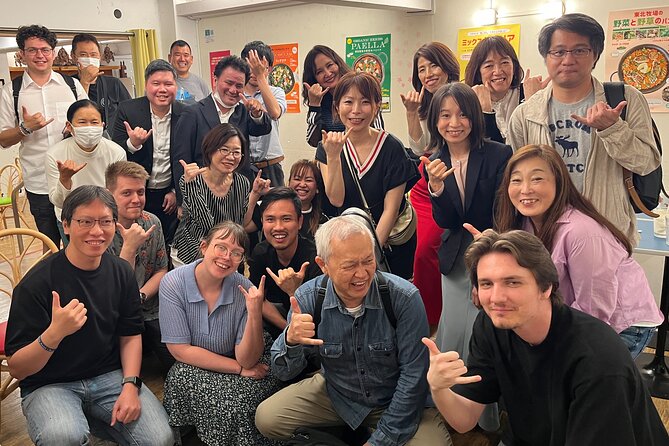
The best part of this Tokyo activity is its simple format: you keep changing conversation partners instead of getting stuck with one quiet table. I like the rotating conversations, which give you repeated chances to practice Japanese or English, and the seasonal games, which take pressure off when conversation slows. The main consideration is that this is a social meetup, not a structured language class, so you should be ready to start conversations and adapt to a mixed group.
I also like the reasonable $10 price and the balance of people in the room. About 40 percent are Japanese participants, while tourists and expats make up about 60 percent, giving you a useful mix of language ability and cultural backgrounds. The group can include more than 10 people and is capped at 20, so you get variety without signing up for a huge event.
Key points to know
- Rotating seats keep the evening moving: You switch partners and meet everyone rather than spending the whole session with one person.
- Japanese and English are the focus: The format is built for practice in both languages in a casual setting.
- Seasonal activities change from event to event: Cultural games and small challenges help fill quiet moments.
- The group mix is international: About 40 percent Japanese participants join alongside tourists and expats.
- The session lasts 1 hour 45 minutes: It begins and ends at Sakura Cafe and Restaurant Nippori.
- The $10 fee covers the activity only: Coffee, tea, and dinner cost extra.
What the 1-hour-45-minute evening is really like
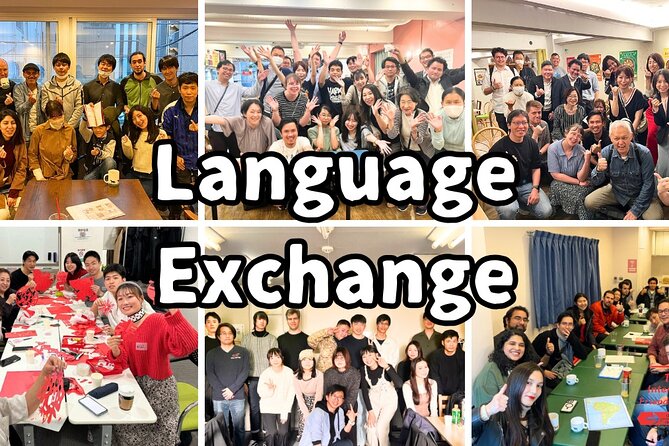
This is a conversation event with a light activity program around it. You meet at Sakura Cafe and Restaurant Nippori in Sendagi, in Tokyo’s Bunkyo City, then take part in a series of short conversations and group changes. The exact games are not announced in advance, so each session has a slightly different feel.
You should think of the evening as guided social practice. The organizers provide the structure, but you provide the energy. If you ask questions, share a little about yourself, and try a few phrases in the language you are learning, the format gives you many chances to improve.
The rotating setup matters. In an ordinary meetup, two people may hit it off while others sit quietly, or a conversation may become difficult to maintain. Here, switching seats gives you a fresh start. You can try the same Japanese phrase with several people, hear different accents, and learn how various speakers express similar ideas.
The format also suits people who dislike long introductions. You do not need to walk into the cafe and approach every table on your own. The activity itself moves you around.
Other Tokyo days people book alongside this one:
- Mt Fuji and Hakone 1-Day Bus Tour Return by Bullet Train
★ 5.0 · 26,383 reviews - 1-Day Tokyo Bus Tour
★ 5.0 · 14,250 reviews - Tokyo: teamLab Planets TOKYO Digital Art Museum Entry Ticket
★ 4.6 · 9,779 reviews
Starting at Sakura Cafe and Restaurant Nippori
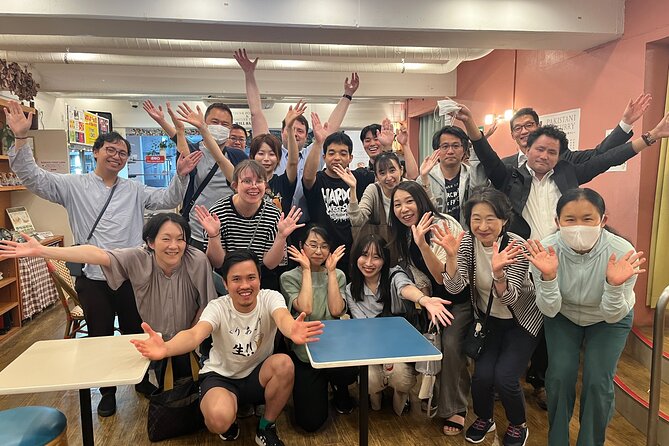
The meeting point is Sakura Cafe and Restaurant Nippori, at 3-chome 43-15 Sendagi, Bunkyo City, Tokyo 113-0022. The cafe is near public transportation, which is useful in Tokyo, though you should allow enough time to find the correct entrance and arrive ready for the start.
The event ends back at the same meeting point. That makes the evening easier to plan than an activity that finishes in another part of town. You can meet friends afterward, return to your hotel, or continue exploring without arranging a separate pickup.
A cafe meeting point also gives the gathering a relaxed setting. Keep in mind that coffee and tea are not included, and dinner is not included either. The $10 covers the activity and all fees and taxes, but any food or drink you order is an additional purchase.
Switching partners instead of forcing small talk
The strongest feature here is the seat rotation. You are not expected to make one conversation carry the entire event. After talking with one person, you move on and meet someone else, creating a steady rhythm throughout the 105-minute session.
This helps in several ways. A beginner can try simple questions repeatedly. A stronger speaker can adjust to different levels. Someone who feels shy at the start gets multiple low-stakes introductions instead of one make-or-break conversation.
You may also find that different partners bring out different topics. One person may talk about daily life in Japan, another about travel, food, work, or language study. The activity does not promise a formal topic list, so you should have a few easy questions ready.
Good starters include asking where someone is from, how long they have been in Tokyo, what Japanese food they like, or what brought them to the event. You do not need polished Japanese. The point is to use what you know and keep trying.
The local and international mix
The stated participant balance is about 40 percent Japanese and 60 percent tourists or expats. That is a useful ratio for anyone who wants contact with local speakers but also appreciates the ease of an international group.
If your Japanese is basic, the expat and tourist portion can make the first few minutes feel less intimidating. If your English is the language you want to practice, you may find many people ready to use it. Japanese participants give you a reason to try Japanese phrases, while international participants can help keep the conversation moving.
The group is more than 10 people each time, with a maximum of 20. That is large enough to offer variety, but still small enough that the rotating format can bring you into contact with most or all of the room. The exact number may change within that limit, so the atmosphere could feel more intimate on one night and more active on another.
This mix is especially useful for solo visitors. You do not have to depend on a travel companion to keep the evening going. You arrive alone and have a built-in reason to meet new people.
A completely different kind of day in Tokyo:
- Mt Fuji & Hakone Cruise, Drum Show Bullet Train 1 Day from Tokyo
★ 4.0 · 7,413 reviews - Tokyo: Shinjuku Food Tour (13 Dishes at 4 Local Eateries)
★ 5.0 · 6,603 reviews - Tokyo Mt Fuji 5th St & Hakone Cruise Bus Tour w/Bullet Train
★ 4.4 · 5,024 reviews - Flagship 2-Hours Official Street Go-Kart Tour – Tokyo Bay Shop
★ 5.0 · 4,974 reviews
Seasonal games make the language practice easier
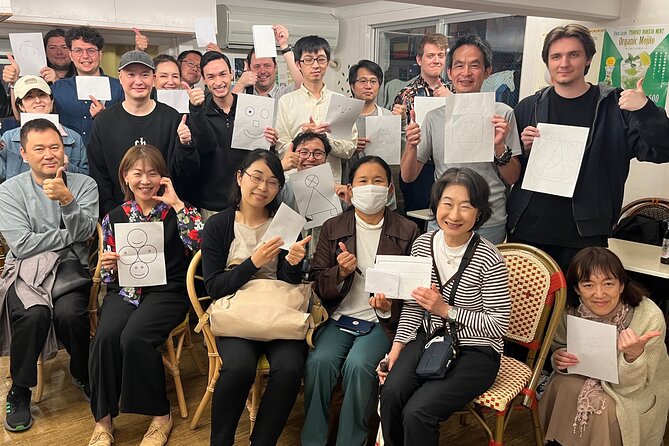
Each session includes surprise activities, which can range from fun challenges to cultural games. Since the exact program changes, you should not book this expecting one fixed lesson plan.
That uncertainty is part of the appeal, but it is also a practical limitation. If you want a carefully sequenced Japanese grammar class, this is not the right format. If you want a social event where games provide a natural reason to speak, it makes more sense.
Games help when a conversation begins to fade. Instead of searching for a new subject, you can respond to a prompt or take part in a shared task. That gives beginners something concrete to talk about and lets more confident speakers join without taking over every exchange.
The activities may also give you a small window into how people from different backgrounds approach Japanese culture and everyday communication. The event description does not promise a particular cultural lesson, so keep your expectations open rather than arriving with a fixed program in mind.
Why the $10 price works
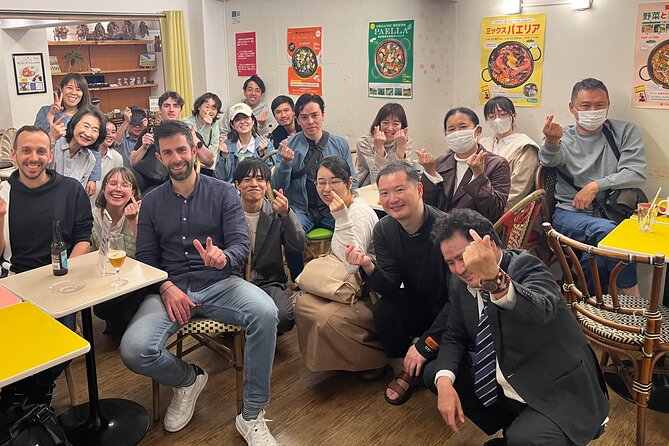
At $10 per person, this is an inexpensive way to add a social activity to a Tokyo evening. All fees and taxes are included, and the event lasts about 1 hour and 45 minutes. That works out to a modest cost for organized conversation practice and a chance to meet a mixed group.
The value depends on what you want. If you are looking for a private teacher, a formal curriculum, or detailed correction of grammar, the price is not the main point because this event does not promise those services. You are paying for organization, access to a group, conversation rotation, and activities.
For a solo visitor, the value is stronger. A $10 booking can turn an unplanned evening into a social experience with a clear meeting point and end point. For couples or friends, it can add a different kind of activity to a sightseeing schedule, though you should still be willing to talk with people outside your own group.
Food and drinks are extra, so keep that in mind when comparing the total cost with a cafe meal or evening event. You are not paying for dinner.
Who will get the most from this event
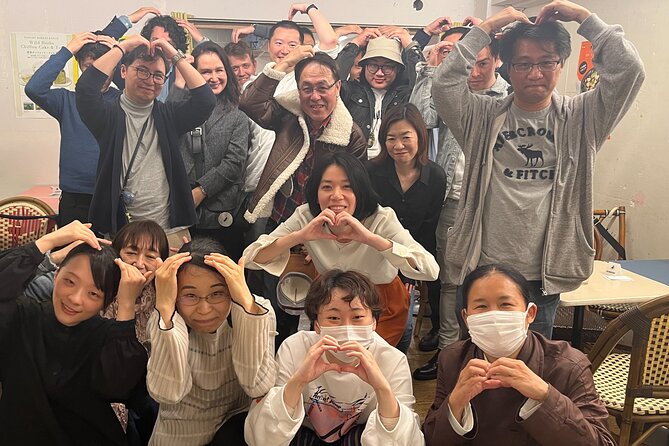
I would recommend this activity to you if you fit one or more of these descriptions:
- You want to practice Japanese without committing to a formal class.
- You speak English and want to meet Japanese locals in a relaxed setting.
- You are traveling alone and would like a ready-made social setting.
- You enjoy meeting expats and tourists as much as local residents.
- You prefer activities with movement and variety rather than one long conversation.
- You like light games and surprises instead of a fixed lesson plan.
It may be less suitable if you want a quiet cafe evening, a private conversation, or a precise teaching schedule. The group size can reach 20, and the event is designed for interaction. You should expect to speak with several people and take part in the group flow.
You also need a little patience. Language exchange means different levels of fluency will be present. Some conversations may feel easy, while others may require gestures, repetition, or a change of subject. That is normal for this kind of event.
What the published feedback can and cannot tell you
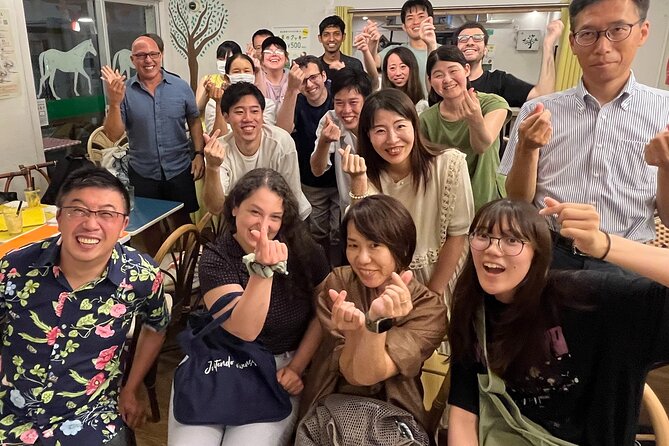
The supplied feedback includes strong praise for sake tasting workshops, including comments about a broad sake selection, an English-language presentation, and a host named Maksim. Those comments describe a different activity, not this language exchange, so I would not use them to judge the conversation event.
The relevant information here is the event format itself: more than five years of language exchange hosting, rotating conversations, seasonal games, a Japanese and international participant mix, and a group limit of 20. The overall rating shown is 4.9 from 9 reviews, but the written comments provided do not clearly evaluate this particular language exchange.
That distinction matters. The rating is encouraging, but you should base your decision on the details that match the experience you are booking. Do not expect a sake lesson, an eight-drink tasting, or instruction from Maksim based on the unrelated written comments.
Timing, booking, and cancellation advice
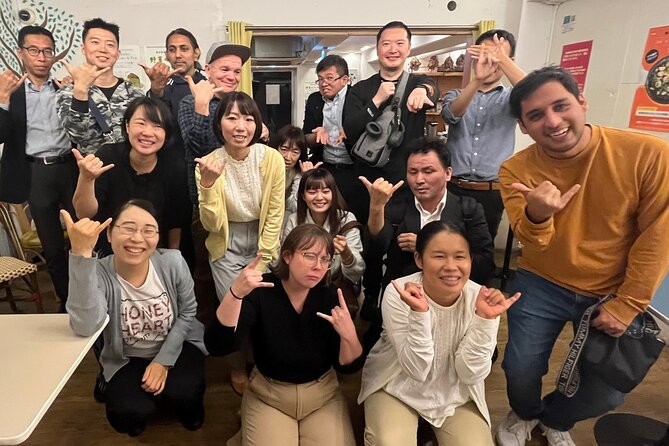
This activity is often booked about 48 days ahead, which suggests that some dates fill well before the event. If the evening fits your schedule, booking early may be wise, especially during a busy Tokyo visit.
You receive confirmation at booking, and the activity uses a mobile ticket. The event lasts approximately 1 hour and 45 minutes, and it returns to the original meeting point.
Free cancellation is available if you cancel at least 24 hours before the local start time. A cancellation made less than 24 hours before the start time is not refunded, and late changes are not accepted. For a short, low-cost activity, that policy is fairly clear, but check your Tokyo schedule before booking if your plans are still unsettled.
Should you book this language exchange?
Book it if you want an affordable, social way to practice Japanese or English and you like meeting a mix of locals, expats, and tourists. The rotating format is the main reason to choose it. You get several chances to speak, and the games give the evening a bit of structure.
Skip it if you want a formal language course, a private lesson, or a meal included in the price. Also keep the written feedback in perspective, since the supplied comments concern sake workshops rather than this event.
For a solo visitor with an open evening in Tokyo, this is a sensible $10 choice. Arrive with a few conversation starters, bring your mobile ticket, and be willing to switch partners. That is where the activity earns its value.
FAQ
Where does the language exchange take place?
It starts and ends at Sakura Cafe and Restaurant Nippori, 3-chome 43-15 Sendagi, Bunkyo City, Tokyo 113-0022, Japan.
How long does the activity last?
The session lasts approximately 1 hour and 45 minutes.
What languages are practiced?
The event is designed for practicing Japanese and English through conversations with other participants.
How many people can join?
More than 10 participants join each session, and the maximum group size is 20 travelers.
What type of activities are included?
The program includes rotating conversations, seasonal games, fun challenges, and cultural games. The exact activities vary by session.
Are food and drinks included?
No. Coffee, tea, and dinner are not included. All activity fees and taxes are included.
Is the meeting point near public transportation?
Yes. The meeting point is described as being near public transportation.
Is a mobile ticket available?
Yes. The activity includes a mobile ticket, and confirmation is received at the time of booking.
Can I cancel for a full refund?
Yes, if you cancel at least 24 hours before the local start time. Cancellations made less than 24 hours before the start time are not refunded.
Newly reviewed around Tokyo
- Tokyo Asakusa:Calligraphy & Make T-shirt Activity★ 5.0 · 62 reviews
- Intercity Shuttle, Tokyo to Haneda /Narita /Yokohama /Makuhari★ 5.0 · 5 reviews
- 1 Hour Travel around Tokyo with a Professional Photographer★ 5.0 · 3 reviews
- Travel Tokyo with Your Own Personal Photographer★ 5.0 · 43 reviews
- Train in Samurai Swordsmanship and Defeat the Demon in Tokyo★ 5.0 · 5 reviews
- Shuttle Van 6hr Tokyo Tour to-and-from Tokyo, Yokohama and Narita★ 5.0 · 9 reviews
- Kickboxing & Body Training with EX-Pro Fighter★ 5.0 · 4 reviews
- Traditional Japanese Knife Sharpening Class★ 5.0 · 18 reviews