
Reviewed · SHIBUYA TOURS
Tokyo Private Tour: One Day Highlights and Optional Shibuya Sky
Tokyo comes at you fast, and this seven-hour private tour gives you a useful first look without leaving you to decode the train system alone. You move from old Asakusa to modern Shibuya and Harajuku, with time at Senso-ji, Meiji Shrine, Shibuya Crossing, and Shibuya Sky.
I like the one-to-one flexibility and the fact that public transportation is part of the experience, not something you must figure out yourself. I also like the hotel pickup and drop-off within Tokyo’s 23 wards, which makes an early sightseeing day much easier. The main drawback is pace: ten stops in seven hours means short visits and plenty of walking, not a slow study of each neighborhood.
Key points
- Asakusa opens the day with Tokyo’s historic side: You’ll see Kaminarimon, Nakamise Shopping Street, Senso-ji, Asakusa Shrine, and Sumida Park.
- Shibuya Sky admission is included: The open-air observatory rises about 230 meters above the city, though its outdoor area can close in high winds.
- Public transportation is part of the lesson: Your guide handles the trains and can help you learn how to buy tickets and move around Tokyo.
- Private means adaptable: The group is limited to your party, with a maximum of 10 people per booking.
- Harajuku adds a sharp change of mood: Meiji Shrine brings quiet forest paths, while Takeshita Street brings youth fashion and crowds.
- The tour is best for first-time visitors: It covers famous sights quickly and helps you get your bearings for later independent exploring.
A fast Tokyo introduction from old temples to rooftop views
At $178.38 per person, this tour sits above the price of a standard group sightseeing outing, but you are paying for more than a list of attractions. You get a private English-speaking guide, hotel pickup and drop-off in the 23 wards, public transportation, admission fees, taxes, and photos of your group.
The value depends heavily on your party size. For one or two people, the price buys convenience and personal attention. For a larger group, it becomes more attractive because the private format can cost less per person while still giving you one guide for your own party. A maximum of 10 people is allowed per booking.
The day starts at 9:30 a.m. and uses trains and walking rather than a private car. That matters in Tokyo. You avoid sitting in traffic, but you do need a moderate level of fitness and enough energy for stations, sidewalks, temple grounds, shopping streets, and observatory visits.
The tour is particularly useful on a first day in Tokyo. Guides such as Rie, Emiko, Kaori, Eriko, Keita, Shizuko, Yoko, and Takeshi have been praised for adjusting the day, explaining customs, and helping with the railway system. You should not assume a particular guide will be assigned, but the guide is clearly an important part of what you are buying.
More things to do in Shibuya:
- Official Street Go-Kart in Shibuya
★ 5.0 · 3,435 reviews - Tokyo: Street Kart Experience in Shibuya
★ 4.9 · 1,484 reviews - Shibuya Meltdown Nightlife Tour: All-You-Can-Drink Bar Hopping
★ 5.0 · 1,058 reviews
Asakusa Culture Tourist Information Center and the view toward Senso-ji
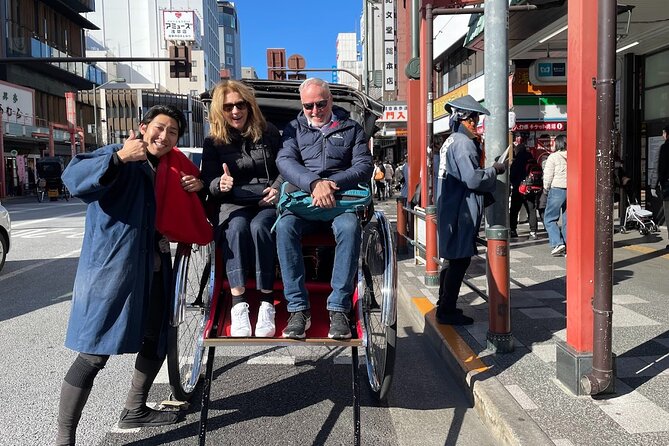
Your first stop is the Asakusa Culture Tourist Information Center, a striking eight-story building designed by architect Kengo Kuma. You spend about 15 minutes here, with admission included.
This is not simply a place to collect maps. The building itself is part of the neighborhood’s modern identity, and it gives your guide a sensible place to frame Asakusa before you enter the temple district. The stop is short, so think of it as an orientation rather than a full architectural visit.
From here, you walk toward Kaminarimon, also called the Thunder Gate. The gate is the outer entrance to Senso-ji and one of Tokyo’s most familiar symbols. It makes a strong opening because you go from a contemporary information center straight into one of the city’s oldest and most recognizable religious areas.
Nakamise Shopping Street and the Thunder Gate
Nakamise Shopping Street runs for more than 200 meters between Kaminarimon and Senso-ji. The scheduled visit lasts about 15 minutes, which is enough to understand the layout and glance at the stalls, but not enough for a relaxed shopping session.
You’ll find souvenirs and traditional-style goods along this approach. The street is part of the Senso-ji experience, not just a commercial interruption. It has long served as the route into the temple grounds, and your guide can help explain what you are seeing rather than leaving you to treat it as a generic market.
Keep your expectations sensible. With a full schedule ahead, this is a walk-through stop. If you want to shop carefully, ask your guide how much flexibility is possible, but adding time here may mean cutting another stop later.
Senso-ji and Asakusa Shrine
Senso-ji receives about 30 minutes, the longest individual stop in Asakusa. This Buddhist temple is one of Tokyo’s most colorful and popular religious sites. Its origin is tied to a legend from the year 628, when two brothers reportedly found a statue of Kannon in the Sumida River.
The important point is the contrast between Senso-ji and the surrounding modern city. The temple gives you a direct introduction to Japanese Buddhist practice, local customs, and the way a major religious site fits into everyday Tokyo life. Your guide can explain the meaning behind the buildings and rituals, which adds much more than a quick photograph from the gate.
Only 10 minutes are scheduled at nearby Asakusa Shrine. This smaller Shinto shrine is close enough to Senso-ji that you can see two religious traditions in one compact area. Senso-ji is Buddhist, while Asakusa Shrine belongs to Japan’s native Shinto tradition.
That pairing is one of the more useful parts of the morning. You do not need a long lecture to notice the difference in scale and atmosphere. The short visit also keeps the tour moving, though anyone with a strong interest in religious architecture may want more time than the schedule allows.
More 1 Day Tours in Tokyo:
- Mt Fuji and Hakone 1-Day Bus Tour Return by Bullet Train
★ 5.0 · 26,383 reviews - 1-Day Tokyo Bus Tour
★ 5.0 · 14,250 reviews - Mt Fuji & Hakone Cruise, Drum Show Bullet Train 1 Day from Tokyo
★ 4.0 · 7,413 reviews - Tokyo: DisneySea 1-Day Passport
★ 4.5 · 2,726 reviews
Sumida Park and Tokyo Skytree views
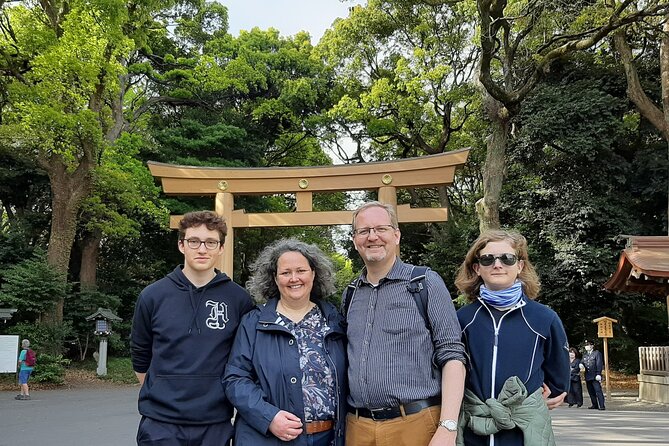
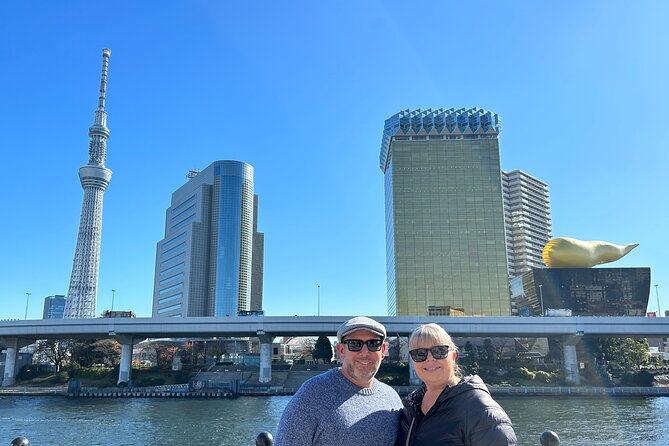
The final Asakusa stop is Sumida Park, where you spend about 10 minutes along the Sumida River. The park offers open views toward Tokyo Skytree, without buildings blocking the sightline.
This is a brief pause after the temple area and gives you a different angle on Tokyo. Instead of looking up at gates and roofs, you look across the river toward one of the city’s modern landmarks. The breeze and river setting can also provide a welcome break before the train journey to Shibuya.
Ten minutes is enough for photographs and a short rest. It is not a park stroll. If weather is poor, the value of this stop will depend on visibility.
Shibuya Sky at 230 meters
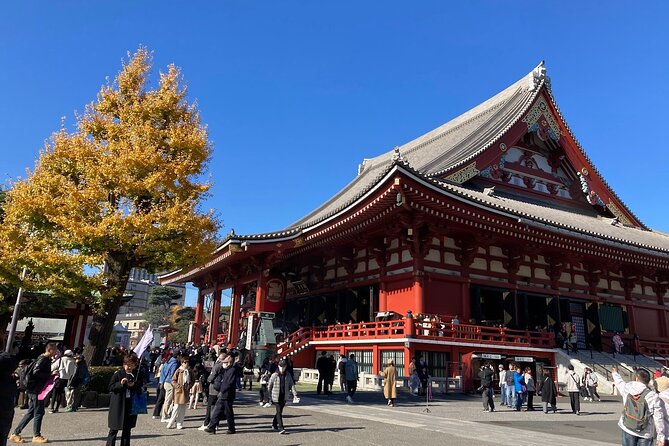
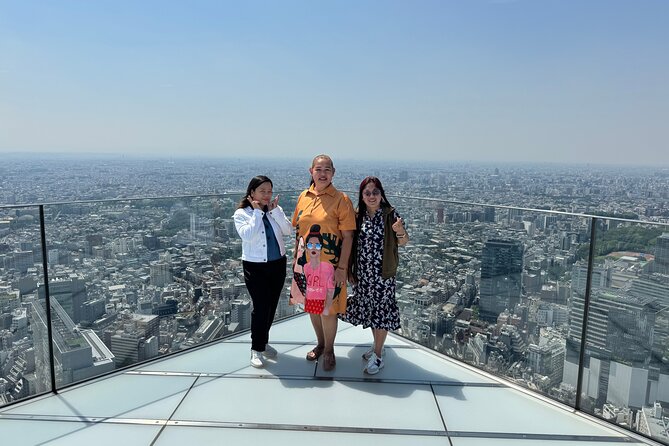
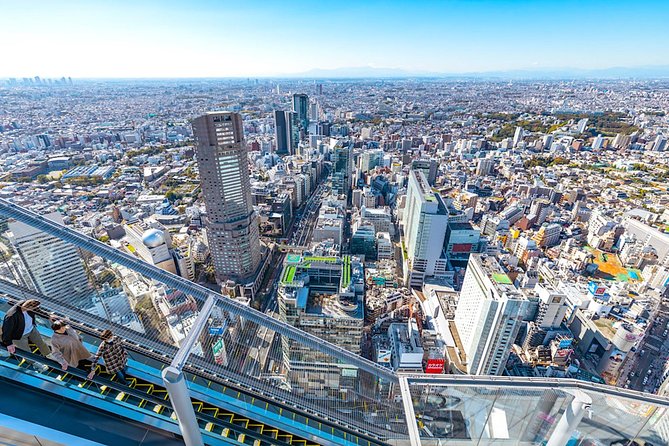
Shibuya Sky is the day’s big modern viewpoint. The observatory rises about 230 meters above the ground and is the highest point in the Shibuya district. Admission is included, and the planned visit lasts 30 minutes.
The Sky Edge is the signature feature. From this corner, you look down over the city from an open-air rooftop setting. You’ll see the scale of Shibuya more clearly from above, including the roads, buildings, and movement that can feel confusing at street level.
The title describes Shibuya Sky as optional, but the tour details list admission as included. If this is important to you, confirm the current arrangement when booking. The outdoor area can close because of high winds, as happened to one visitor, even when the rest of the tour goes ahead. That is a weather and safety issue, not something the guide can control.
The 30-minute slot gives you time for the main view, but not a long stay in the building. The schedule is designed to pair Shibuya Sky with the crossing and Hachiko, not to make the observatory a separate half-day visit.
Shibuya Crossing and Hachiko
After the high view, you return to street level for Shibuya Crossing. This is one of Tokyo’s signature public scenes, where large waves of pedestrians cross in several directions when the signal changes.
The crossing is more interesting when your guide explains how it fits into Shibuya rather than treating it as a photo stop alone. You’ll have about 15 minutes, so you can cross, pause for pictures, and take in the surrounding signs and buildings. The area can feel crowded, and the short time helps prevent the tour from getting bogged down.
Hachiko receives only five minutes. The bronze dog statue sits near the station and is a well-known meeting point. Its story of loyalty has made it one of Shibuya’s most familiar landmarks.
This is a quick stop by design. You are not visiting a museum or spending time with a long display. You see the statue, hear the basic story, and continue. The location is convenient because it connects directly with the crossing and the station area.
Meiji Shrine beside Harajuku Station
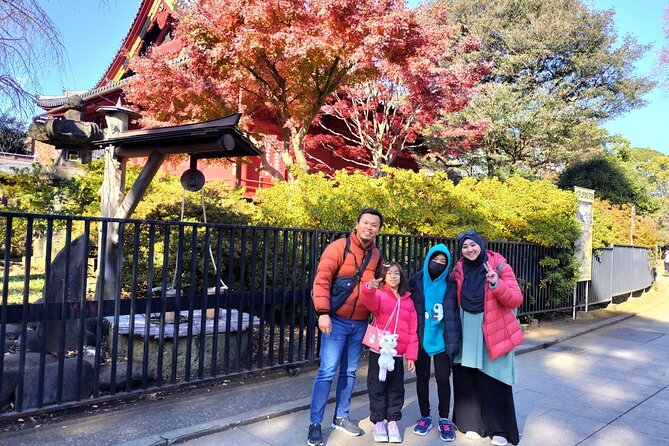
Meiji Jingu Shrine gets 45 minutes, making it the longest stop of the afternoon. Dedicated to the deified spirits of Emperor Meiji and Empress Shoken, it sits beside busy Harajuku Station but feels separate from the station district.
The change in mood is the point. After the signs, traffic, and crowds of Shibuya, you enter a major Shinto shrine complex connected with tall trees and broad walking routes. You’ll have time to see the main area and listen to your guide explain the shrine’s role and customs.
The schedule does not promise a long forest walk or a detailed religious tour, so keep your expectations practical. Still, 45 minutes is enough to make this more than a passing photograph. It is also a good place to ask questions about Shinto practice, shrine etiquette, and the difference between this site and Senso-ji.
If you have mobility concerns, keep in mind that this is a walking-focused day. The tour requires movement through stations, streets, temple grounds, and shrine paths. Service animals are allowed, and the operator advises a moderate level of physical fitness.
Takeshita Street and Harajuku’s youth culture
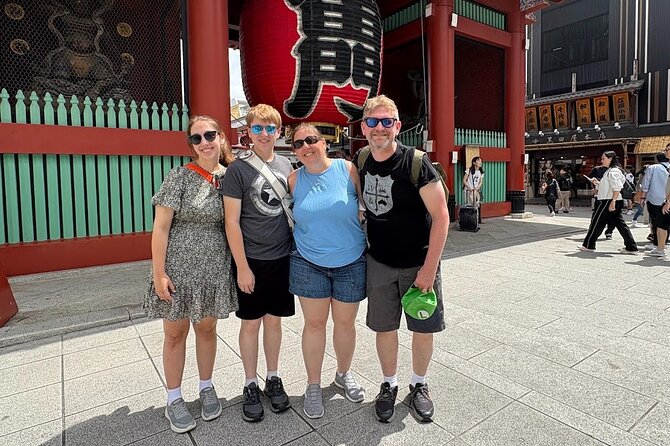
The final scheduled stop is Takeshita Street, with about 30 minutes to explore. This 350-meter street begins across from JR Harajuku Station and is aimed at Tokyo’s fashion-conscious young crowd.
Takeshita Street gives you yet another side of the city. Asakusa presents old Tokyo, Shibuya presents the city’s modern public energy, and Harajuku shows its youth fashion and trend culture. You may find a dense mix of shops and people here, especially at popular times.
Thirty minutes is enough for a walk and a look around, but not an extended shopping trip. Food and drinks are not included, so any snacks or meals are at your own expense. If you have specific dietary needs, tell the guide before the day begins. One guide, Rie, was specifically praised for taking dietary requirements seriously, while other guides have helped visitors locate halal food and prayer-friendly options.
The tour ends after Harajuku, with hotel drop-off included within Tokyo’s 23 wards. Since the day uses public transportation, the final timing can depend on the pace of your group and the city’s normal train conditions.
What the private format really adds
The strongest feature here is not simply that the tour is private. It is the chance to ask for help at the moment you need it.
Guides have assisted with train tickets, explained how to calculate fares, helped visitors exchange JR Pass vouchers, and suggested places to explore after the tour. Takeshi was especially praised for making public transportation easier to understand and for providing Muslim-friendly maps showing halal restaurants in areas such as Shinjuku and Asakusa.
That kind of practical help can save time after the tour. Tokyo’s railway network is excellent, but it can look intimidating when you first arrive. A guide who shows you how to move between Asakusa, Shibuya, and Harajuku gives you a usable lesson, not just a sightseeing route.
The private setup also helps families. Guides have adjusted the pace for older adults and young children, and one guide took particular care of a visitor’s mother. Still, private does not mean effortless. You will walk, use stations, and keep to a fairly full timetable.
Who should book this Tokyo tour?
I would choose this tour if you are visiting Tokyo for the first time and want the major sights explained in one day. It is also a good fit if you are uneasy about public transportation, want hotel pickup, or need a guide who can adjust the day around your interests.
Families and small groups should find the format useful because everyone stays together and the guide can respond to individual needs. The maximum of 10 people keeps the booking private, though a large group will still need to stay organized in busy public places.
You should think twice if you prefer slow travel. Thirty minutes at Senso-ji, 45 minutes at Meiji Shrine, and brief stops at Hachiko and Sumida Park give you an overview, not an exhaustive visit. You may also prefer another option if your main goal is shopping, food, or long time at Shibuya Sky.
Cancellation is free up to 24 hours before the 9:30 a.m. start time. Changes or cancellations made later are not accepted for a refund. That policy is worth noting before you commit, especially if your Tokyo plans are still moving around.
Should you book it?
Book this private Tokyo tour if you want efficient first-day orientation, historic Asakusa, Harajuku, Shibuya Crossing, and Shibuya Sky in one organized day. The guide’s transport help and ability to tailor the route add real value, especially for first-time visitors and families.
Skip it if you want long meals, unhurried temple visits, or a full afternoon at one neighborhood. At $178.38 per person, the price makes the most sense when convenience, personal guidance, and hotel pickup matter more than traveling independently. For the right visitor, it is a practical way to turn Tokyo’s huge scale into a day you can actually manage.
FAQ
How long is the Tokyo private tour?
The tour lasts approximately seven hours and starts at 9:30 a.m.
Is hotel pickup included?
Yes. Hotel pickup and drop-off are included for hotels located within Tokyo’s 23 wards.
Is this a private tour?
Yes. Only your group participates, with a maximum of 10 people per booking.
Is public transportation included?
Yes. Public transportation is included, and the guide accompanies you between the different areas.
Is Shibuya Sky admission included?
The tour details list admission to Shibuya Sky as included. The title describes it as optional, so confirm the arrangement when booking if the observatory is essential to your plans.
What happens if the outdoor area at Shibuya Sky closes?
The outdoor area can close because of high winds. One reported experience continued with the rest of the tour even though the outdoor section was unavailable.
Are food and drinks included?
No. Food and drinks are not included in the tour price.
What level of fitness is needed?
A moderate level of physical fitness is recommended. The day includes walking through neighborhoods, temple and shrine grounds, shopping streets, and public transportation stations.
Are service animals allowed?
Yes. Service animals are allowed.
What is the cancellation policy?
You can cancel up to 24 hours before the experience start time for a full refund. Cancellations or changes made less than 24 hours before the start time are not accepted for a refund.
Newly reviewed around Tokyo
- Tokyo Asakusa:Calligraphy & Make T-shirt Activity★ 5.0 · 62 reviews
- Intercity Shuttle, Tokyo to Haneda /Narita /Yokohama /Makuhari★ 5.0 · 5 reviews
- 1 Hour Travel around Tokyo with a Professional Photographer★ 5.0 · 3 reviews
- Travel Tokyo with Your Own Personal Photographer★ 5.0 · 43 reviews
- Train in Samurai Swordsmanship and Defeat the Demon in Tokyo★ 5.0 · 5 reviews
- Shuttle Van 6hr Tokyo Tour to-and-from Tokyo, Yokohama and Narita★ 5.0 · 9 reviews
- Kickboxing & Body Training with EX-Pro Fighter★ 5.0 · 4 reviews
- Traditional Japanese Knife Sharpening Class★ 5.0 · 18 reviews
Shibuya Tours, compared.
Shibuya Meltdown Nightlife Tour: All-You-Can-Drink Bar Hopping
Read our review →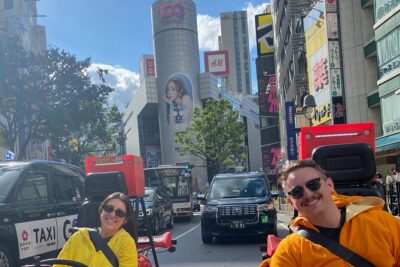
Shibuya Official Street Go-Kart in Shibuya Annex
Read our review →
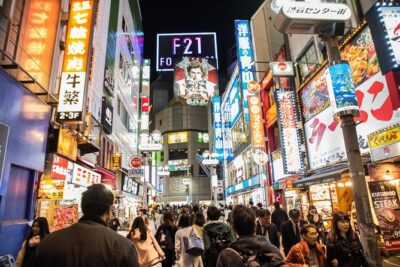
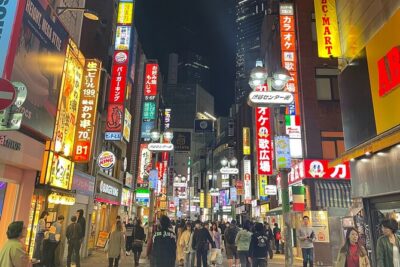

Premium Go-Kart Tour with Tower & Shibuya Crossing
Read our review →Browse the lists this tour appears in