
Reviewed · TOKYO
TokyoSumoShow, ChickenHotPot, and Mochi-Pounding by Pro Wrestlers
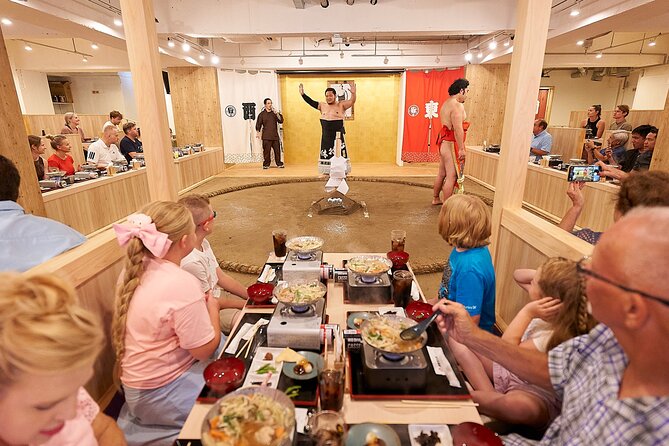
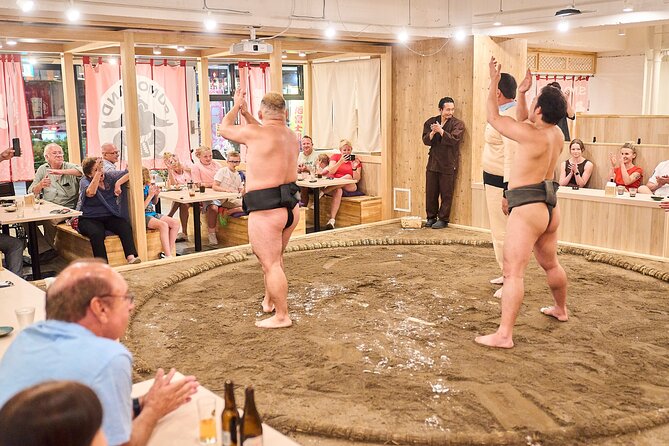
SUMOLAND turns sumo into a lively dinner show, but the best part is that the wrestlers are not just actors in costume. Former top-division professionals demonstrate techniques, perform short bouts, explain the sport, and let you see the physical force of sumo from close range. The ring action is the main event, with food and audience participation filling out the experience.
I like the way the program mixes real sumo expertise with hands-on fun. You can learn basic terms and techniques, try mochi pounding, challenge a wrestler, and take photos without needing to understand a full tournament first. I also like the warm, family-friendly pacing. The staff keeps you involved without piling on too many activities at once.
The trade-off is clear: this is a polished entertainment program, not a morning practice session or an official tournament. If you want quiet ritual, long bouts, and the full rules of professional sumo, this will feel simplified. The meal also gets mixed marks, so book it for the wrestling and interaction first, with the hot pot as part of the package.
Key points at a glance
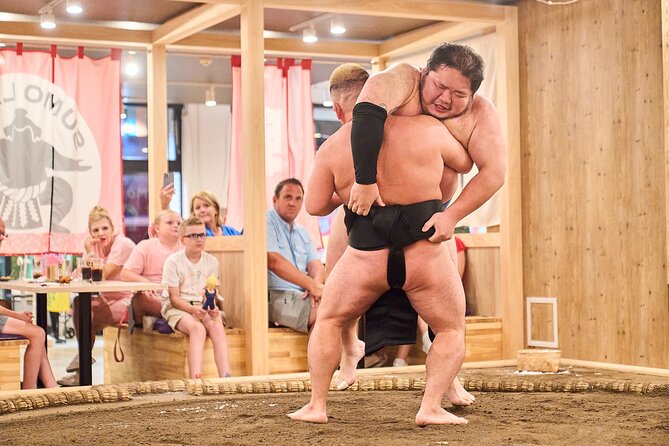
- Former professional wrestlers perform up close: The show includes former top-division wrestlers and is supervised by the 63rd Yokozuna.
- Chicken chanko hot pot is part of the admission: You eat a sumo staple while the program unfolds.
- Audience participation is central: You may try mochi pounding, sumo techniques, or a friendly ring challenge.
- A strong choice for families: Children are welcome to join the mochi activity and sumo challenge, subject to limits.
- Ryogoku location is easy to pair with sightseeing: The venue is a short walk from Ryogoku Station, near major Tokyo attractions.
- It is a show, not a tournament: Expect clear explanations, demonstrations, comedy, and short bouts rather than a full sporting event.
What SUMOLAND gets right about sumo
Tokyo has several ways to encounter sumo, from museum displays to tournament days. SUMOLAND offers something different: a compact stage show where you meet the sport through people, food, movement, and humor.
The performers are former professional sumo wrestlers, including wrestlers who competed at a high level. That matters. Even when the tone is light, the demonstrations show that sumo is not simply two large men pushing each other. Balance, footwork, grip, timing, and explosive power all matter.
The program is supervised by the 63rd Yokozuna, which gives the event a direct link to the upper reaches of the sport. You should still think of the format as entertainment. It is built for first-time visitors, families, and people who want a fun introduction without committing half a day to a tournament.
English-speaking visitors are well served. The format uses Japanese sumo terms with translations and gives you a chance to repeat some of the words. That small touch helps you follow the action instead of watching a string of unfamiliar rituals.
One useful strength is the mix of explanation and showmanship. You learn enough to understand what you are seeing, then the wrestlers put those ideas into motion. The demonstrations of sumo moves and strategies help children and adults see why the sport is so demanding.
Other Tokyo days people book alongside this one:
- Mt Fuji and Hakone 1-Day Bus Tour Return by Bullet Train
★ 5.0 · 26,383 reviews - 1-Day Tokyo Bus Tour
★ 5.0 · 14,250 reviews - Tokyo: teamLab Planets TOKYO Digital Art Museum Entry Ticket
★ 4.6 · 9,779 reviews
Ryogoku arrival and the first look at the venue
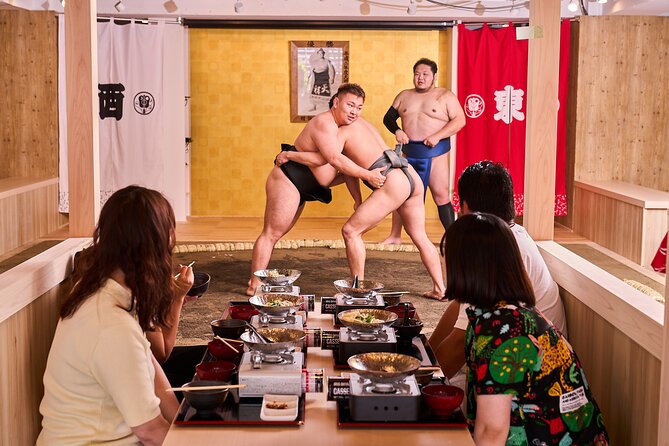
SUMOLAND Tokyo Ryogoku is at 1F Takashima Ryogoku Mansion, 4-32-19 Ryogoku, Sumida City. It is a short walk from Ryogoku Station, and the large sumo wrestler sign and flags make the entrance easier to spot.
Ryogoku is the right setting for this experience. It is Tokyo’s sumo district, so you are not being sent across the city to a generic dinner theater. You can combine the visit with nearby sightseeing, including the area around Asakusa, Akihabara, Nihonbashi, or Tokyo Skytree.
The show runs about 90 minutes to two hours. Arrive a few minutes early because the program starts on time. That advice is especially useful for families, since late arrival can make it harder to settle in, find your seat, and begin the meal without distraction.
Your seat is assigned by the venue. You cannot choose a particular location, but the setup is designed for close viewing, and the action takes place near the dining area. If you are reserving for a child, pay attention to the seating rule. Standard seats are not considered safe for holding a child on your lap, so reserve a place for every person. Box seats can hold up to six people and allow a child to sit on an adult’s lap.
Chicken chanko hot pot while the show gets moving
The meal is chicken chanko hot pot, the hearty dish associated with sumo stables. At SUMOLAND, it is prepared with supervision from the Isegahama stable. You eat as the program develops, so the food gives you something to do while staff prepare the next demonstration.
Chanko is not meant to be a delicate restaurant tasting menu. It is filling, communal food, and the broth is an important part of the experience. Some diners find the hot pot delicious, especially the broth, while others consider the meal simply fine. I would put it this way: the hot pot adds real context and value, but it should not be your only reason for paying the admission price.
The food also helps the event avoid a stop-start feel. You are not sitting through a long lecture, then waiting around for the next act. The meal, demonstrations, video material, and audience activities are arranged to keep the room active.
Vegetarian and vegan meals can be arranged if requested at least two days in advance. Gluten-free and halal meals are not available, though you may bring your own food. Alcohol and bottled water are not included, so plan for those separately if needed.
The meal has a practical family advantage. Children can eat while watching the performers, and the shared hot pot creates a natural break between activities. If your family has very different food preferences, contact the provider early rather than hoping for a last-minute adjustment.
Ring entrance ceremony and the power of presentation
The ring entrance ceremony gives the show its first strong visual moment. Former top-division wrestlers enter with the gestures and presence associated with sumo, bringing the audience’s attention to the ring.
This is one of the places where the production feels more like a stage show than an ordinary lesson. The entrance gives you a sense of ceremony before the explanation and comedy begin. It also helps younger children understand that the ring is not just a platform for rough play.
The performers have plenty of personality. That matters because sumo can seem formal and distant if you only see short clips online. Here, the wrestlers speak to the room, interact with the audience, and use humor to make the subject approachable.
You will also see why the show works for people who know little about the sport. The performers do not assume that you can tell a slap from a belt grip or understand why foot position matters. They introduce the basics before asking you to watch a demonstration.
A completely different kind of day in Tokyo:
- Mt Fuji & Hakone Cruise, Drum Show Bullet Train 1 Day from Tokyo
★ 4.0 · 7,413 reviews - Tokyo: Shinjuku Food Tour (13 Dishes at 4 Local Eateries)
★ 5.0 · 6,603 reviews - Tokyo Mt Fuji 5th St & Hakone Cruise Bus Tour w/Bullet Train
★ 4.4 · 5,024 reviews - Flagship 2-Hours Official Street Go-Kart Tour – Tokyo Bay Shop
★ 5.0 · 4,974 reviews
Mochi pounding with a chance to join in
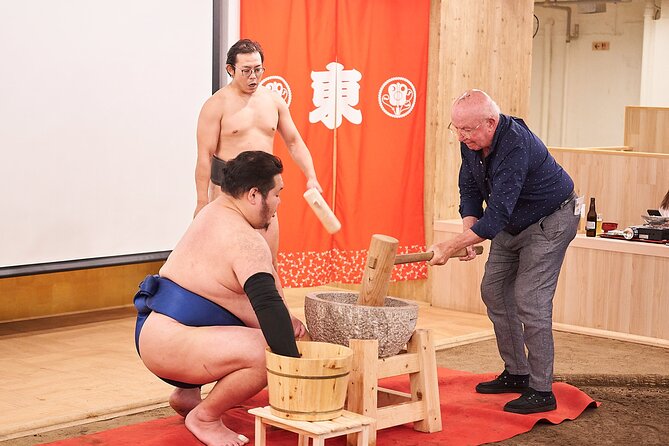
The mochi-pounding segment offers a hands-on taste of a Japanese tradition. The wrestlers show how the process works, then invite audience participation. Children are welcome, which makes this one of the most natural parts of the program for families.
The mochi itself is also a popular part of the meal experience. You may find the finished mochi more memorable than the hot pot, especially if you like a chewy dessert and enjoy seeing how it is made.
Participation is not guaranteed for everyone. If many people want to join the mochi activity or the sumo challenge, the venue may limit participation to one person per group or use a lottery. That is worth knowing before you promise your child a turn.
Even if you do not get into the ring or handle the mallet, watching other participants is part of the entertainment. The staff keeps the activity moving and makes the audience part of the show rather than passive diners.
Sumo demonstrations, explanations, and short bouts
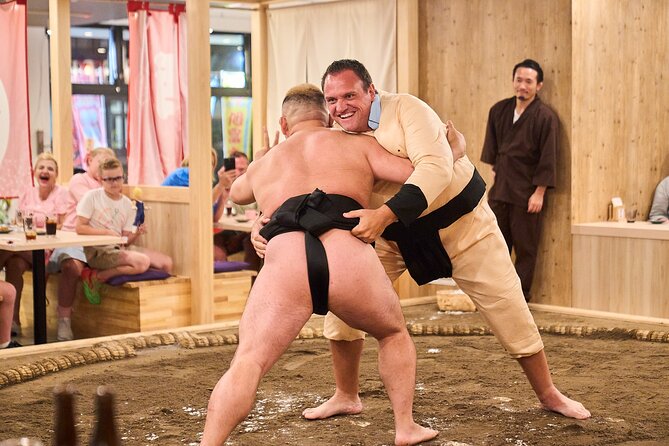
The central show presents sumo techniques, training ideas, and short bouts. The wrestlers show how the sport works in a way that is easy to follow, then add the physical drama that brought you here.
This is also where you gain a better respect for the athletes. Sumo may look simple from a distance, but the demonstrations make clear how much control and strength are needed. One family activity is especially effective because it lets children try a sumo match against a real wrestler. The result is usually funny, but it also makes the size and force difference obvious.
The bouts near the end are presented as legitimate demonstrations by former professionals, not as a full tournament. They can be surprisingly impressive. You are close enough to hear the impact and see the quick adjustments, yet the tone remains safe and controlled for an audience setting.
One limitation is that the history and tournament rules may not be covered in as much detail as some visitors want. The show gives you a useful introduction, but if you want a serious lesson on rankings, tournament structure, or sumo history, you may need a museum visit or an actual tournament afterward.
That is not a flaw for most families. The program aims for momentum, and the performers spend more time showing you the sport than lecturing about it. Still, people who want a scholarly presentation should set their expectations correctly.
Photo time and the value of close contact
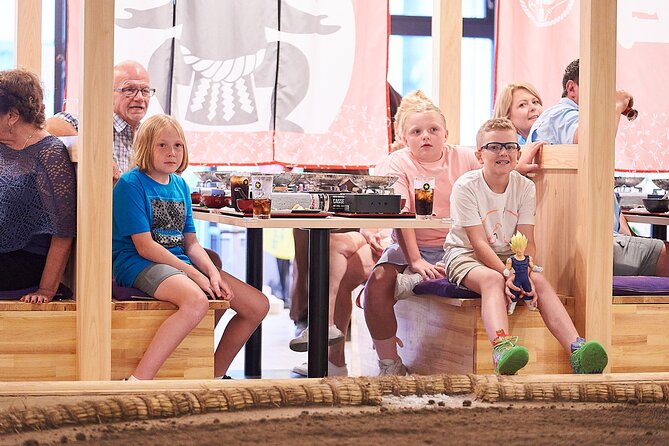
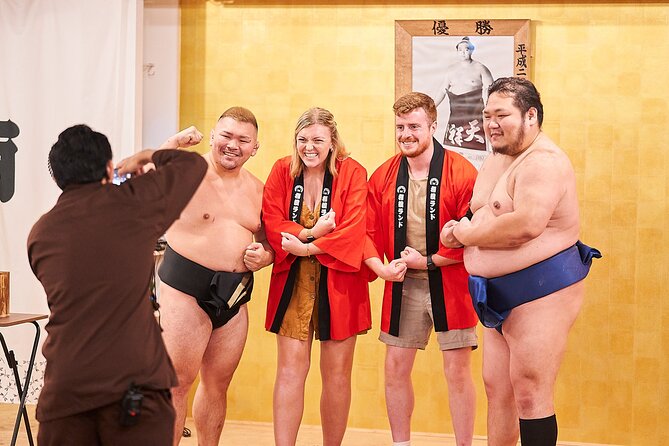
Photo time is not an afterthought. You can take pictures with the wrestlers and capture your group near the ring. The close-up setting is one of the strongest reasons to choose this over simply watching a short sumo clip or reading about the sport.
The photo opportunity also works well for mixed-age groups. Adults get a memorable Tokyo picture, while children get a clear sense of scale when standing beside a professional wrestler. Staff members help keep the process organized, so it does not become a chaotic scramble.
Souvenirs may change by season, so do not book this expecting one particular gift. The included souvenir is a nice extra, but the photographs and the live demonstrations are the lasting parts of the visit.
Is $106.12 a fair price?
At $106.12 per person, this is not a cheap meal or a casual cultural stop. You are paying for a bundled experience: admission, chicken chanko hot pot, a performance by former professional wrestlers, interactive activities, photo time, and a souvenir.
I think the value is strongest for a family or first-time visitor who wants several things in one reservation. A sumo explanation, meal, show, and hands-on activities could otherwise require separate planning. The 90-minute to two-hour length also fits neatly into a busy Tokyo day.
The value is weaker if you mainly want to eat. Some diners find the food very good, but others say it is only okay. At this price, the entertainment and the access to the wrestlers must carry the purchase.
It is also not the right comparison with a tournament ticket. A tournament offers the full sport, a larger venue, formal rankings, and the excitement of official competition. SUMOLAND offers access, explanation, humor, and participation. For many people, especially those with children, that is easier to enjoy and easier to fit into a short visit.
The 98 percent recommendation rate and 4.9 rating from 226 reviews point to strong satisfaction, but the individual comments show why. The praise centers on the wrestlers, the staff, the interaction, and the overall organization. The hot pot receives more mixed treatment. That is a fair picture of the value.
Who will enjoy this most
I would recommend SUMOLAND to families with children or teenagers, couples wanting an unusual dinner activity, and adults who have never watched sumo before. The show is lively enough for children, but the demonstrations still give adults a better idea of the sport’s skill and discipline.
It also suits English-speaking visitors who want clear guidance. Japanese words are introduced with translations and practice, so you can follow the basic vocabulary without preparation.
You may want to skip it if your main goal is a quiet meal, a formal cultural performance, or a detailed study of sumo rules. The room is interactive, the activities can involve audience members, and the tone is intentionally light.
If your group is large, understand that mochi pounding and the sumo challenge may be limited to one person per group or decided by lottery. Book the exact number of people, especially when using standard seating with children.
Practical planning for a Ryogoku visit
Use the mobile ticket and allow enough time to find the building. The venue is near public transportation, but Ryogoku has enough nearby sights to make an early arrival worthwhile.
You could visit the surrounding area first, then attend SUMOLAND as a fixed-time meal and show. Ryogoku is also a sensible base for connecting with Asakusa, Akihabara, Nihonbashi, or Tokyo Skytree.
Booking confirmation is sent within 48 hours and depends on availability. The cancellation policy is friendly if your plans are still changing: cancel at least 24 hours before the start time for a full refund. Cancellations or changes inside that 24-hour window are not refunded or accepted.
For food adjustments, make requests at least two days ahead. Bring your own food if gluten-free or halal requirements apply, since those meals are not provided. Alcohol and bottled water cost extra.
Should you book SUMOLAND Tokyo?
Book it if you want an entertaining first look at sumo, especially with children or a mixed-age group. The close-up action, approachable former professionals, mochi activity, and photo time create a strong Tokyo memory, and the meal makes the schedule simple.
Skip it if you are looking for an official tournament or a serious historical lecture. SUMOLAND is polished, interactive, and tourist-friendly by design. Its strength is not complete sporting authenticity. Its strength is making sumo understandable, funny, physical, and easy to enjoy in under two hours.
For most first-time visitors, I think the price makes sense when you treat it as a full evening activity rather than dinner alone. Arrive early, reserve every seat you need, request dietary changes in advance, and keep your expectations focused on the wrestlers and the show. That is where SUMOLAND earns its place in a Tokyo itinerary.
FAQ
How long does the SUMOLAND experience last?
The program lasts approximately 90 minutes to two hours.
What food is included?
Chicken chanko hot pot is included. Alcoholic beverages and bottled water are not included.
Can children participate?
Yes. Children are welcome to take part in mochi pounding and the sumo challenge. Participation may be limited to one person per group or decided by lottery if many people want to join.
Are vegetarian or vegan meals available?
Vegetarian and vegan meals are available if requested at least two days in advance. Gluten-free and halal meals are not available, though you may bring your own food.
Can I choose my seat?
No. Seat locations are assigned by the venue. Box seats can accommodate up to six people and allow a child to sit on an adult’s lap. Standard seats require you to reserve a place for each person because holding a child on your lap is considered unsafe.
What happens if I need to cancel?
You receive a full refund if you cancel at least 24 hours before the experience start time. Cancellations and changes made less than 24 hours before the start time are not accepted or refunded.
Newly reviewed around Tokyo
- Tokyo Asakusa:Calligraphy & Make T-shirt Activity★ 5.0 · 62 reviews
- Intercity Shuttle, Tokyo to Haneda /Narita /Yokohama /Makuhari★ 5.0 · 5 reviews
- 1 Hour Travel around Tokyo with a Professional Photographer★ 5.0 · 3 reviews
- Travel Tokyo with Your Own Personal Photographer★ 5.0 · 43 reviews
- Train in Samurai Swordsmanship and Defeat the Demon in Tokyo★ 5.0 · 5 reviews
- Shuttle Van 6hr Tokyo Tour to-and-from Tokyo, Yokohama and Narita★ 5.0 · 9 reviews
- Kickboxing & Body Training with EX-Pro Fighter★ 5.0 · 4 reviews
- Tokyo History: Sensoji Temple & Asakusa District Private Tour★ 5.0 · 28 reviews