
Reviewed · TOKYO
【Tokyo⇄Chiba】 Japanese School Day – Kimino High School
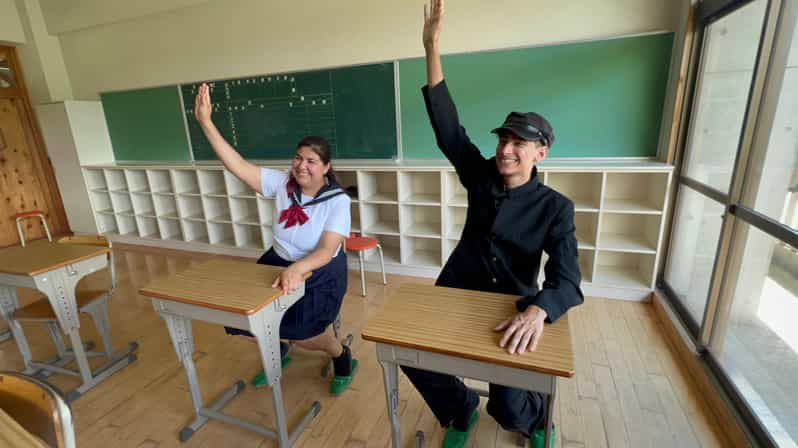
The most unusual part of this Chiba day is that you do not simply watch Japanese school life. You put on a gakuran or sailor suit, join homeroom with a real teacher, attend lessons, clean the classroom, and receive a diploma before the day ends.
I like the hands-on rhythm, especially the calligraphy on a hanetsuki paddle that you take home. I also like the mix of ordinary school customs and playful activities, from lunch and cleaning to Undokai sports and ninja games.
The main consideration is the early start if you choose the Shinjuku shuttle. It leaves at 8:30 AM sharp, and a late arrival counts as a same-day cancellation. The schedule can also shift with group size.
Key points at a glance
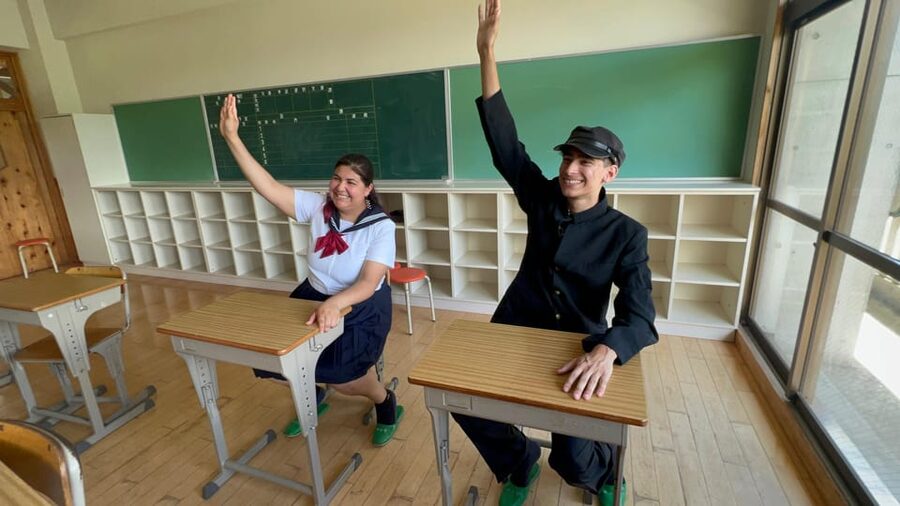
- Uniforms and indoor shoes included: Choose a gakuran or sailor suit and change before class begins.
- A real school-day structure: Your day includes homeroom, Japanese language, social studies, physical education, cleaning, and graduation.
- A souvenir you make yourself: Practice Japanese calligraphy on a hanetsuki paddle and take it home.
- School lunch is part of the experience: Sit down for a traditional Japanese school meal rather than stopping at a café.
- The afternoon gets playful: Try Undokai sports and ninja activities, then join a Japanese festival with games, food, and sake.
- Two ways to reach the site: Select transfer from Shinjuku Station or arrange your own way to the Kimitsu meeting point.
Becoming a student for one day in Kimitsu
This experience uses school customs as its backbone, but it is designed for adults and international visitors who want more than a costume photograph. You follow the flow of a school day, with lessons, lunch, exercise, cleaning, and a graduation ceremony giving the six-hour program a clear shape.
That structure matters. It keeps the day from becoming a loose collection of games. You begin as a new student, take part in classes, and finish with a diploma and a festival. For anyone who has watched Japanese school anime, manga, or dramas, the format makes familiar images feel more concrete.
The setting is in Kimitsu, in Chiba Prefecture, with the activity based at CAMPiece Kimitsu Haiko Camping Ground. The supplied information gives two starting options: a transfer from 1-chōme-7-3 Nishishinjuku, or a meeting option in Kimitsu. Check the exact choice you book, since the meeting point changes with the option.
The experience runs for about six hours to one day. The listed schedule begins with morning homeroom at 11:00 AM and finishes with the Japanese traditional festival at 4:00 PM. If you use the Shinjuku shuttle, the vehicle departs at 8:30 AM. That early departure leaves time for the journey before class begins, but it also means you need to treat the pickup time as firm.
Other Tokyo days people book alongside this one:
- Mt Fuji and Hakone 1-Day Bus Tour Return by Bullet Train
★ 5.0 · 26,383 reviews - 1-Day Tokyo Bus Tour
★ 5.0 · 14,250 reviews - Tokyo: teamLab Planets TOKYO Digital Art Museum Entry Ticket
★ 4.6 · 9,779 reviews
Uniforms, indoor shoes, and the first classroom
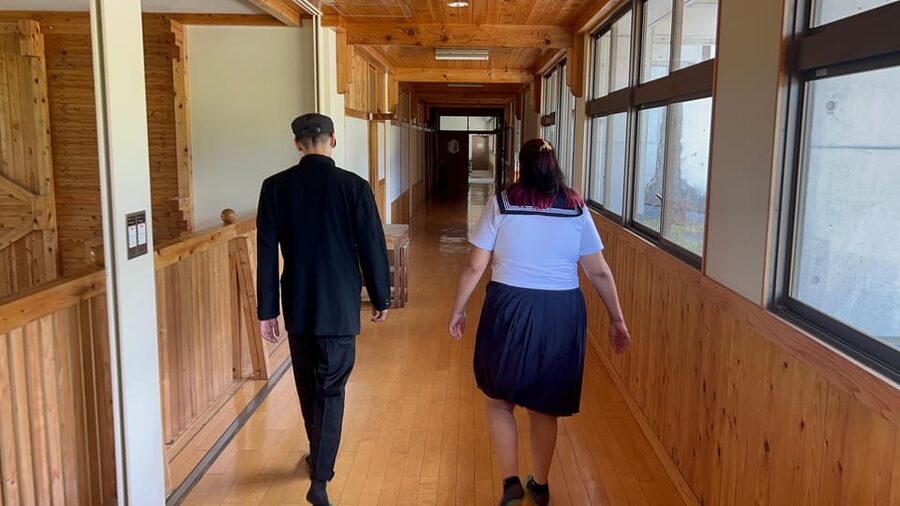
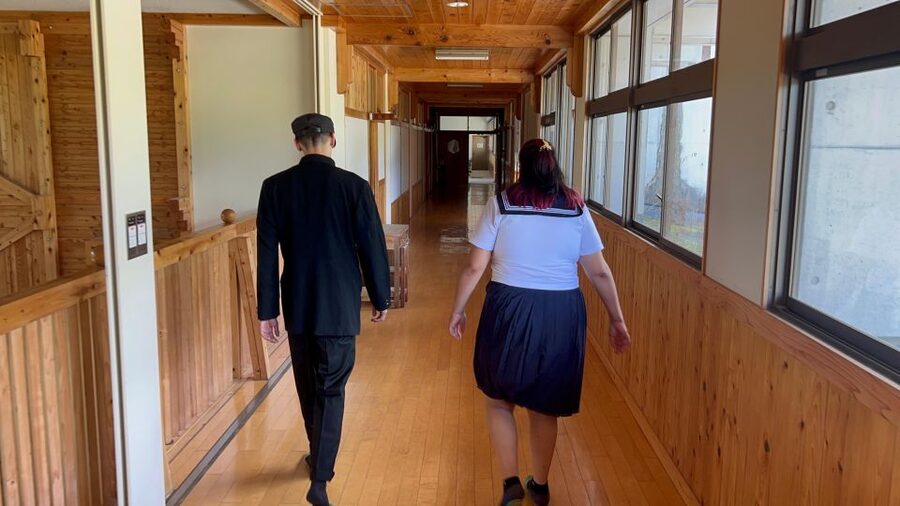
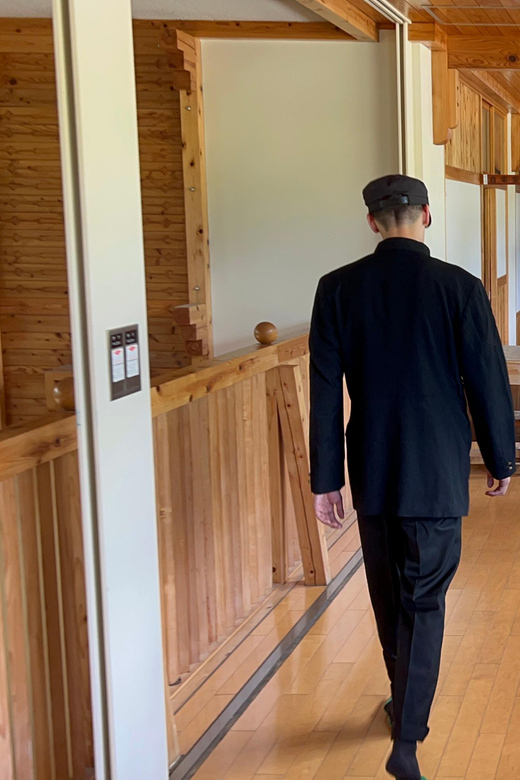
On arrival, you change into a Japanese school uniform. The choices are a gakuran, the dark buttoned uniform associated with boys’ schools, or a sailor suit, the familiar sailor-style uniform often seen in Japanese school settings. Rental uniforms and indoor shoes are included, so you do not need to bring a costume of your own.
This first change is more than a photo opportunity. In Japanese schools, outdoor shoes and indoor shoes are kept separate, and changing footwear is part of the normal school routine. The activity uses that detail to help you shift from sightseeing mode into student mode.
Morning homeroom begins at approximately 11:00 AM. A real homeroom teacher leads the session, with instruction available in English and Japanese. The supplied information does not give the teacher’s name, so do not expect a named celebrity instructor. The useful point is that the opening class is led by someone connected to the school setting rather than by a guide simply explaining it from the sidelines.
This is a good moment to take photographs in uniform, especially if you want pictures that show more than a rented costume. The experience may include media coverage and filming, so tell the organizers ahead of time if you do not want to appear in recorded material.
Calligraphy on a hanetsuki paddle
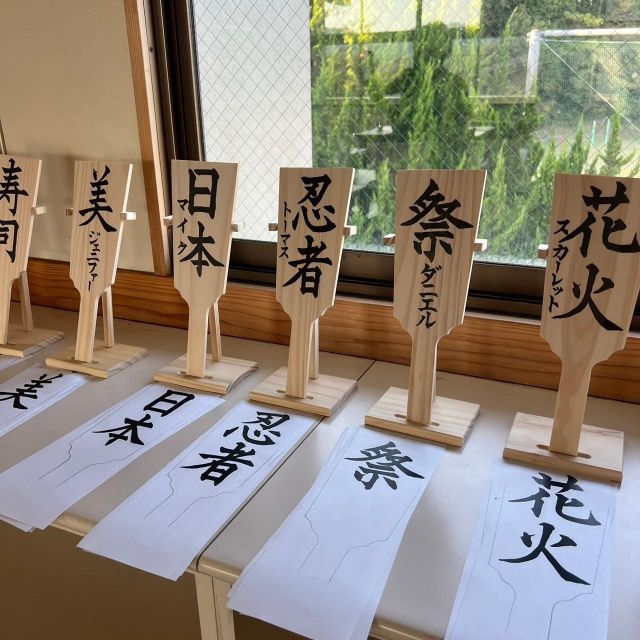
At about 11:30 AM, Japanese language class turns into a calligraphy workshop. You write on a hanetsuki paddle, a traditional wooden paddle associated with a Japanese New Year game, and take the finished item home.
I like this part because it gives you a physical reminder of the day without adding a separate souvenir-shopping stop. The paddle also has more character than a standard paper calligraphy sheet. Your handwriting may not look perfect, but that is part of the fun. You are making something during class, not buying a finished object after it.
The class is listed as Japanese language, with calligraphy as the activity. English-speaking instruction is included, and the listed languages are English and Japanese. If you want to ask about the meaning of the characters or the technique, this is the time to do it.
The workshop also helps balance the louder afternoon activities. You get a quiet, focused task before lunch, and the paddle gives the morning a definite result. Families, couples, and visitors who prefer crafts to competitive games may find this one of the most satisfying portions of the day.
School lunch at noon
School lunch follows at approximately 12:00 PM. A school meal is included in the price, so you do not need to leave the site to find food during the program. Drinks are not included, though vending machines are available.
Lunch is valuable because it shows an everyday part of school life rather than a special performance. The meal is presented as a traditional Japanese school lunch, and it gives the morning classes a natural pause. You eat as part of the school schedule, not as a tourist stop squeezed between attractions.
The available information does not specify the exact menu or any allergy arrangements. If you have dietary restrictions, ask the provider before booking. Do not assume that the included lunch can be changed.
For many people, lunch will be one of the most memorable parts because it is simple. You are not being taken to a famous restaurant. You are trying the kind of meal that belongs to the school-day setting, which is precisely the point.
A completely different kind of day in Tokyo:
- Mt Fuji & Hakone Cruise, Drum Show Bullet Train 1 Day from Tokyo
★ 4.0 · 7,413 reviews - Tokyo: Shinjuku Food Tour (13 Dishes at 4 Local Eateries)
★ 5.0 · 6,603 reviews - Tokyo Mt Fuji 5th St & Hakone Cruise Bus Tour w/Bullet Train
★ 4.4 · 5,024 reviews - Flagship 2-Hours Official Street Go-Kart Tour – Tokyo Bay Shop
★ 5.0 · 4,974 reviews
Social studies with a cosplay twist
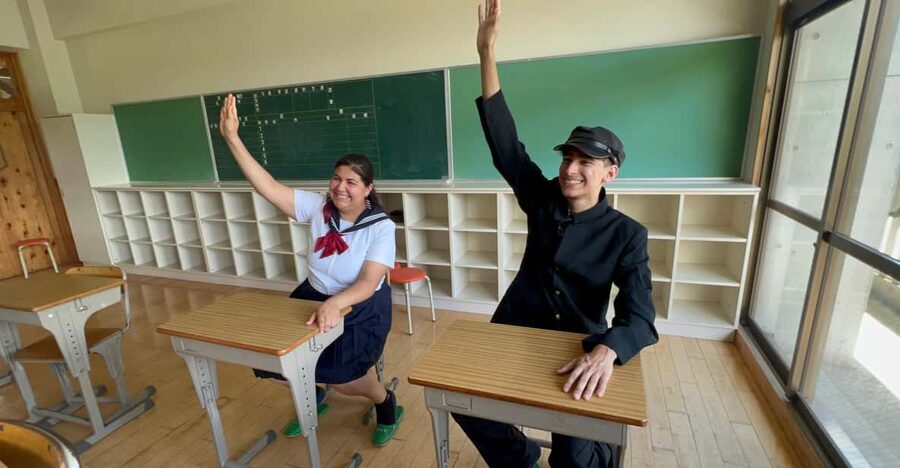
At 1:00 PM, the social studies class includes cosplay. The exact format is not described in detail, so you should expect a themed class activity rather than a conventional lecture with a long academic presentation.
This is where the experience shifts from school routine to playful cultural interpretation. The cosplay element fits the day’s larger idea: you are stepping into a recognizable Japanese school world, but in a friendly activity built for participation. It can be especially appealing if you enjoy anime, manga, or Japanese dramas and want to act out the style rather than only photograph it.
Do not book this expecting a full museum-style history lesson. The schedule uses social studies as an interactive component, and the main value comes from taking part. The English-speaking teacher can help you follow along, but the lesson remains a short piece of a larger program.
Undokai, ninja activities, and the physical education class
At about 2:00 PM, physical education introduces Undokai, the Japanese sports festival. You also take part in ninja activities. The program is designed around cooperation, movement, and shared tasks rather than passive observation.
This section received especially strong praise in the available feedback, with emphasis on exercise and working together. That fits the design of Undokai, where group participation matters as much as individual ability. You do not need to be a serious athlete to enjoy it, but you should be comfortable taking part in physical activities.
The provider does not give a detailed list of games, nor does it state the level of exertion. Wear the supplied indoor shoes and come prepared to move. If you have an injury or physical limitation, ask for details before reserving, since the program includes sports and ninja activities.
The cooperative element is important. It gives strangers an easy way to interact without forcing awkward introductions. You may find that the sports period is where the group begins to feel like a class rather than a set of separate bookings.
Why cleaning time matters
At approximately 2:50 PM, you take part in cleaning time. This can seem like a surprising inclusion in a paid cultural activity, but it is one of the most useful details in the schedule.
Japanese schools are known for having students help clean their classrooms and shared spaces. Here, cleaning is not just a story told by a teacher. You perform the custom yourself, which makes the idea easier to understand.
It also slows the program down after the physical education session. Instead of rushing straight from games into a ceremony, the class returns to a quieter routine. That change of pace feels deliberate and helps the graduation ceremony make sense.
If you want only entertainment, cleaning may feel like the least exciting part. If you want a closer look at school customs, it is one of the day’s better choices. It shows that school life includes duties as well as lessons and festivals.
Graduation at 3:20 PM
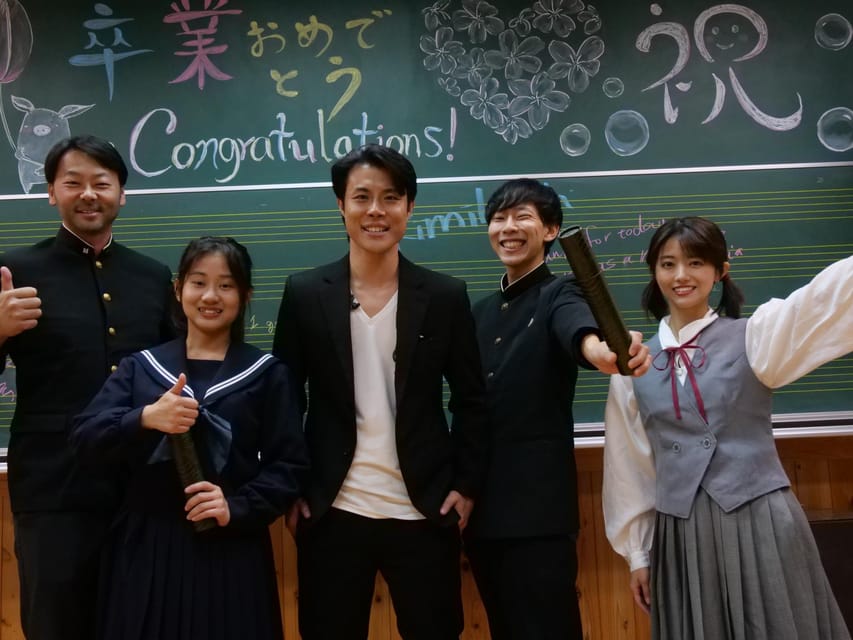
The graduation ceremony begins at approximately 3:20 PM. You finish the school day by receiving a diploma.
The diploma gives the experience a clean ending. Without it, the day could feel like a series of themed activities. With it, the program has a beginning, middle, and finish: you arrive as a new student, complete the schedule, and graduate.
The ceremony also makes the experience work well for special occasions. If you are marking a birthday, family trip, reunion, or first visit to Japan, the diploma gives you a small keepsake beyond the calligraphy paddle.
The exact ceremony format is not provided, so keep expectations modest. This is a playful graduation at the end of a cultural activity, not a formal Japanese school commencement. Still, it is a fitting final chapter before the last event of the day.
A Japanese festival with games, food, and sake
At about 4:00 PM, the school day ends with a traditional Japanese festival. The program includes games, food, and sake.
This final section changes the mood again. You have already experienced the disciplined rhythm of classes, lunch, and cleaning. The festival lets you celebrate the end of the school day in a more social setting.
The inclusion of sake is worth noting for anyone who does not drink. The information does not state that nonalcoholic alternatives are provided, so ask the provider if that matters to you. Drinks are generally not included, though vending machines are available.
The festival is also a good reason to avoid making tight evening plans. The published times are approximate and may change depending on the number of participants. If you are returning to central Tokyo, allow extra time after the event rather than booking a fixed dinner reservation immediately afterward.
Is $277 a fair price?
At $277 per person, this is not a cheap way to fill a few hours. You are paying for a full themed program, uniform and indoor shoe rental, an English-speaking teacher, lunch, the calligraphy paddle, and possibly transfer from Shinjuku if you select that option.
The value depends on what you want from Chiba. If you only want a school uniform photo, the price is hard to justify. You could find simpler costume-based options elsewhere. The stronger value comes from the number of elements packed into the day: lessons, lunch, craft work, sport, cleaning, graduation, and a festival.
The transfer can also improve the value if you are staying in Tokyo and do not want to plan your own route to Kimitsu. It is not included with every booking option, so check the selection carefully. Camping at CAMPiece Kimitsu and accommodation are not included.
I would consider the price reasonable for someone who wants a structured, unusual cultural activity and plans to take part fully. It is less suitable if you prefer independent sightseeing, quiet museum time, or a short photo stop.
Who should book this school day?
I would recommend it to:
- Fans of Japanese anime, manga, and school dramas
- Families looking for an activity with craft, food, movement, and ceremony
- Couples and friends who enjoy dressing up and taking photographs
- Visitors who want guided contact with Japanese customs
- People who like group games and cooperative activities
- Anyone seeking a memorable day outside the usual Tokyo sightseeing circuit
I would hesitate to recommend it to someone who dislikes costumes, group participation, physical activities, or fixed schedules. The program asks you to join in. Watching from the edge would miss much of the point.
The strong response to the friendly atmosphere, teacher, and cooperative exercise suggests that your attitude will shape the day. Arrive ready to take part, and you will get more from it than someone treating it as a quick photo session.
Practical details before you reserve
The minimum group size is three participants. If fewer than three people book, the event will not run and all booked participants receive a full refund.
If you choose the Shinjuku transfer, the shuttle leaves at 8:30 AM. Late arrival is treated as a same-day cancellation, so reach the departure point early. Your meeting point depends on the option selected.
The provider allows free cancellation up to 24 hours before the activity for a full refund, and you can reserve now and pay later. The schedule is approximate, and class times may change with the number of participants.
Media coverage and filming may occur. Tell the provider in advance if you do not want to be included. Uniforms, indoor shoes, lunch, instruction, and the calligraphy paddle are included, while accommodation, camping, and drinks are not.
Should you book the Japanese School Day?
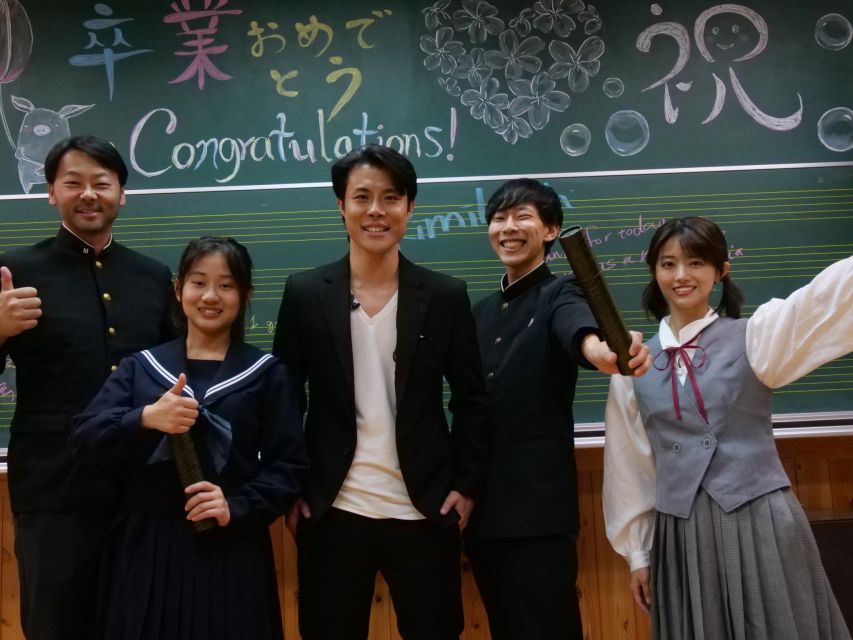
Book it if you want to do, not just see. The best parts are the details that let you act like a student for a day: changing shoes, joining homeroom, writing on a hanetsuki paddle, eating school lunch, cleaning, and collecting a diploma.
Skip it if your main goal is a low-cost visit or a quiet cultural lesson. At $277, the price makes sense only when you use the whole program and enjoy group participation. For the right person, this is a warm, playful way to connect Japanese school customs with the pop-culture images many visitors already know.
FAQ
Where does the Japanese School Day take place?
The experience takes place in Kimitsu, Chiba, at CAMPiece Kimitsu Haiko Camping Ground. One starting option includes transfer from 1-chōme-7-3 Nishishinjuku, while another uses a meeting point in Kimitsu.
Is transportation from Tokyo included?
Transfer from Shinjuku Station is included if you select that option when booking. The shuttle departs at 8:30 AM and leaves promptly.
What languages are spoken during the activity?
Instruction is available in English and Japanese. The school experience includes lessons with an English-speaking teacher.
What does the $277 price include?
The price includes rental of a school uniform and indoor shoes, the school lessons, school lunch, and a hanetsuki paddle with calligraphy to take home. Shinjuku transfer is included only if that option is selected.
Do I receive a souvenir?
Yes. You practice calligraphy on a hanetsuki paddle during Japanese language class, and you can take the paddle home.
Is the activity suitable for people who do not drink alcohol?
Sake is included as part of the traditional festival, but the available information does not specify nonalcoholic alternatives. Drinks are not included, and vending machines are available.
What happens if fewer than three people book?
The event requires at least three participants. If fewer than three people are booked, the activity will not be held and all participants receive a full refund.
Newly reviewed around Tokyo
- Yokohama Port: Private Customizable Tour with Transfer★ 5.0 · 19 reviews
- VIP Private Hostess Club Tokyo Night Life Karaoke with Girls★ 4.8 · 6 reviews
- Wagyu & Sake 8 Course Tasting Dinner in Shinjuku★ 4.9 · 20 reviews
- Walking Tour: Yanaka,Nezu& Sendagi: Tea Ceremony & Old Tokyo★ 5.0 · 3 reviews
- Asakusa: Tokyo’s #1 Family Food Tour★ 4.6 · 8 reviews
- Hidden Gem Food & Drink Night Tour near Roppongi★ 5.0 · 4 reviews
- Unlimited Sake Tasting with Sushi Omakase tasting in Tokyo★ 4.0 · 44 reviews
- From Ocean to Chopsticks Tsukiji Market Food Tour By Local Expert★ 5.0 · 7 reviews